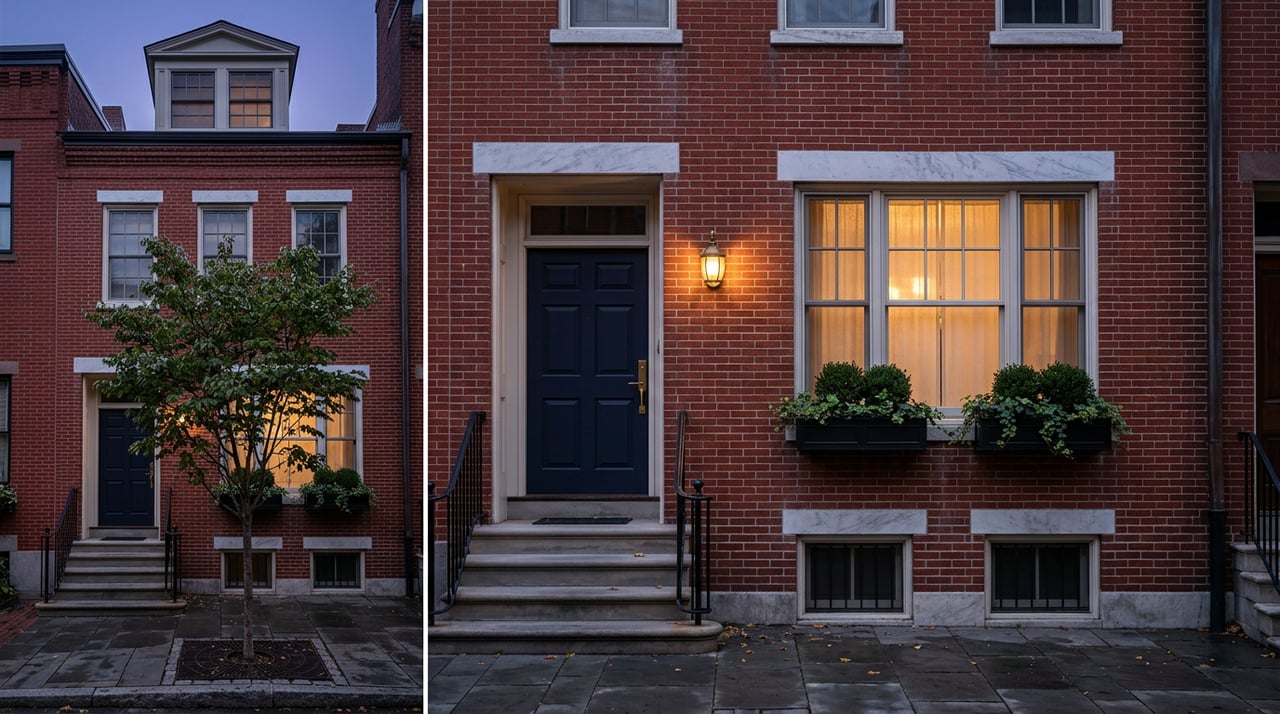
Pull up three sources on Brooklyn Heights home prices right now and you'll get three different neighborhoods. Redfin's trailing three months through June 2026 show a median sale price of $1.9 million, up 48 percent from the same period a year earlier. PropertyShark's Q2 2026 read puts the median at $1 million, down 8.8 percent year over year, with price per square foot essentially flat at $1,808. Zillow's average home value sits at $1,515,242, up 6.9 percent over the past year. None of these numbers is wrong. All of them describe the same eight tenths of a square mile.
The gap between them is the actual story, and it explains more about how to buy or price a home in this neighborhood than any single headline figure could.
A Market Too Small For Its Own Headlines
Brooklyn Heights doesn't trade like a normal residential market because it doesn't have normal transaction volume. PropertyShark counted 54 closed deals in Q2 2026, down 20.6 percent year over year. Redfin logged 35 home sales in June 2026 alone, down from 56 the year before. Homes are moving faster (38 days on market on average, versus 44 a year ago) but there simply aren't enough sales in any given quarter to smooth out the effect of one or two trophy closings.
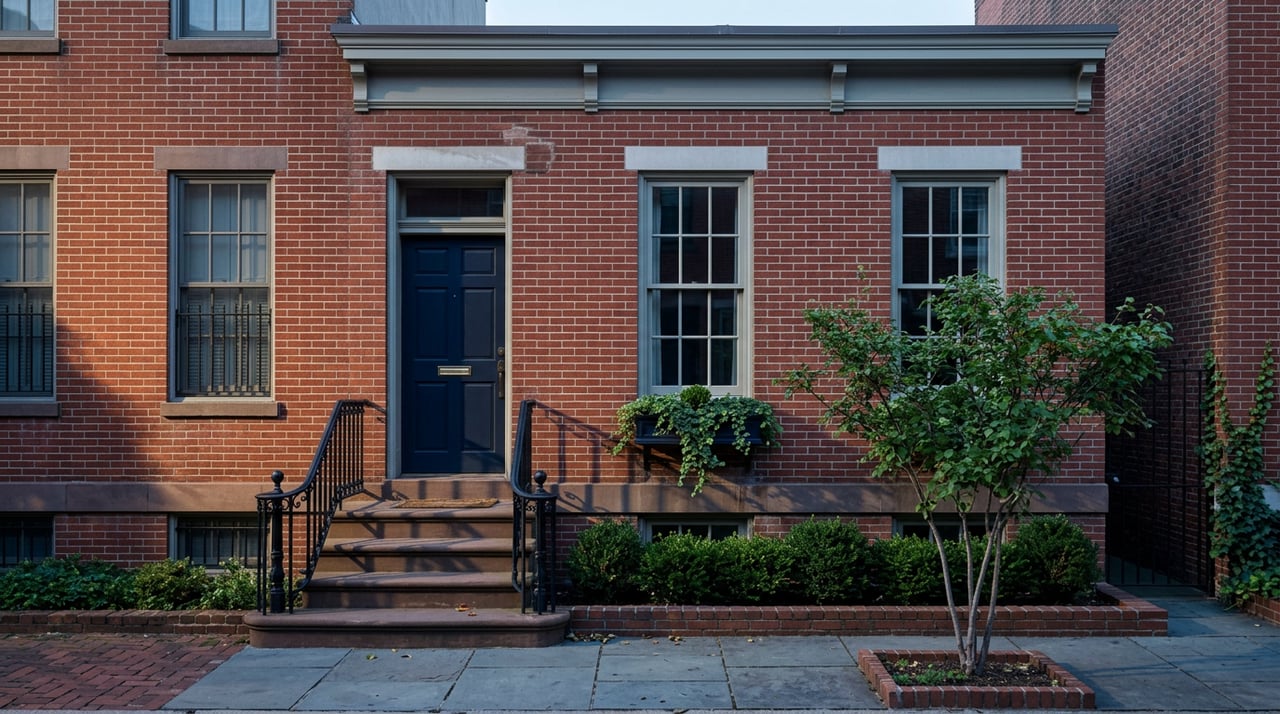
That matters because Brooklyn Heights isn't one housing stock. It's several, layered on top of each other: prewar co-ops that trade in the low sevens, landmarked brownstones and townhouses that clear the mid-to-high sevens or eight figures, and a small but growing set of new waterfront condos priced closer to Manhattan. When a $24.5 million brownstone closes in the same window as a handful of modest co-op resales, the median doesn't describe a "typical" Brooklyn Heights home. It describes whichever few deals happened to close.
| Source | Metric | Window | Reading |
|---|---|---|---|
| Redfin | Median sale price | Trailing 3 months through June 2026 | $1.9M, up 48.0% YoY |
| Redfin | Median $/sq ft | Trailing 3 months through June 2026 | $1,470, down 9.07% YoY |
| PropertyShark | Median sale price | Q2 2026 | $1.0M, down 8.8% YoY |
| PropertyShark | Median $/sq ft | Q2 2026 | $1,808, flat YoY |
| Zillow | Average home value | As of early August 2026 | $1,515,242, up 6.9% YoY |
Read any one row in isolation and you'd draw a confident conclusion about where the market is headed. Read the table and the real lesson is that no single number from a three month window should carry that much weight in a neighborhood this small.
Why The Ground Underneath Doesn't Move Much
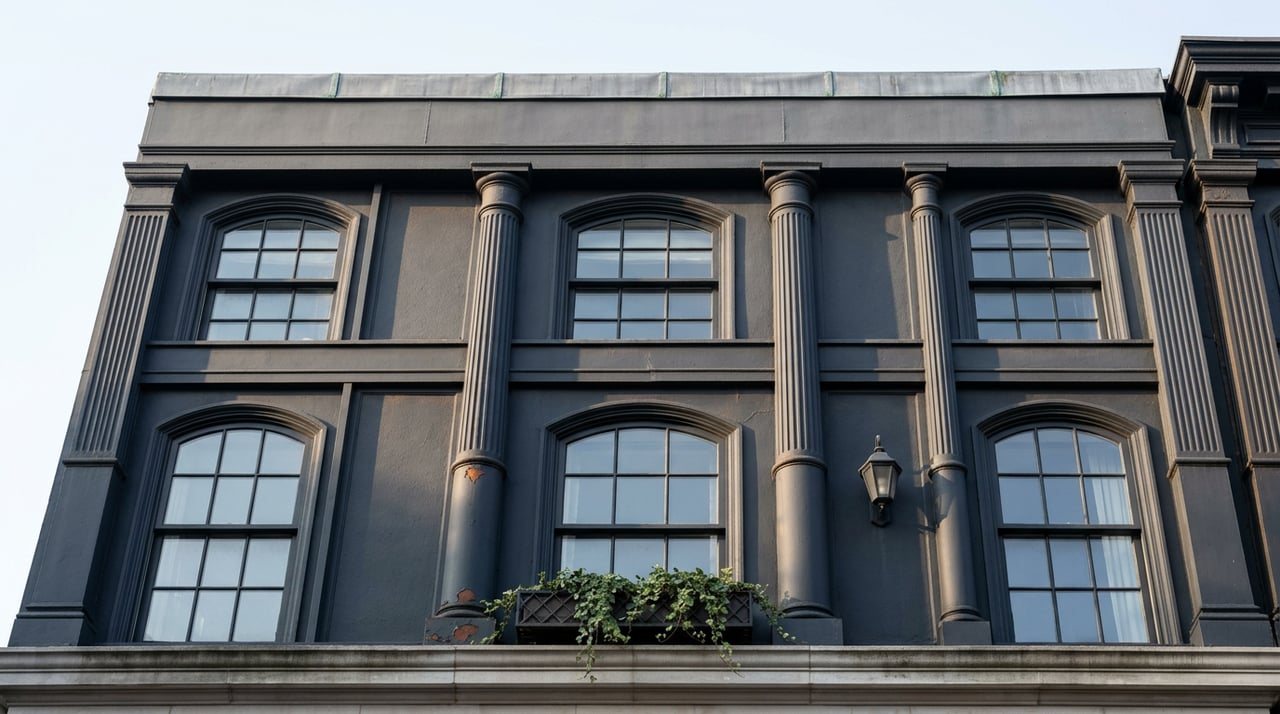
The volatility sits on top of something unusually stable: a fixed, decades old ceiling on how much the physical neighborhood can change. Brooklyn Heights became New York City's first designated historic district in 1965, the outcome of a community petition drive that predates the modern condo boom entirely. Inside that district, the Landmarks Preservation Commission reviews any exterior change visible from the street, brownstone repointing, window replacement, cornice repair, rooftop additions, before the Department of Buildings will issue a permit for the work. SERHANT's own guide to brownstones and townhouses in the Heights lays out the practical version of this: exterior work here almost always runs through Landmarks review on top of the standard permitting process, which stretches renovation timelines and shapes what a seller can realistically promise a buyer.
That review process is also why the neighborhood's housing stock has stayed remarkably fixed while its price swings look erratic. New construction is rare because there's so little land to build on that isn't already inside the protected footprint. Scarcity here isn't a market condition that will loosen next quarter. It's baked into the 1965 designation itself, which is part of why even a down quarter for the median still leaves the Heights among Brooklyn's most expensive addresses.
What Your Money Actually Buys
Because the median blends such different products, the more useful question for a buyer isn't "what's the Brooklyn Heights price" but "which Brooklyn Heights am I shopping in."
Prewar co-ops, concentrated in the neighborhood's older elevator buildings, generally deliver more square footage per dollar than the newer condo stock, but they come with board vetting that adds real time to a transaction. Expect a comprehensive financial package, two to six weeks for board review and interview, and down payment expectations that commonly start at 20 percent and run higher, sometimes considerably higher, in the more conservative buildings.
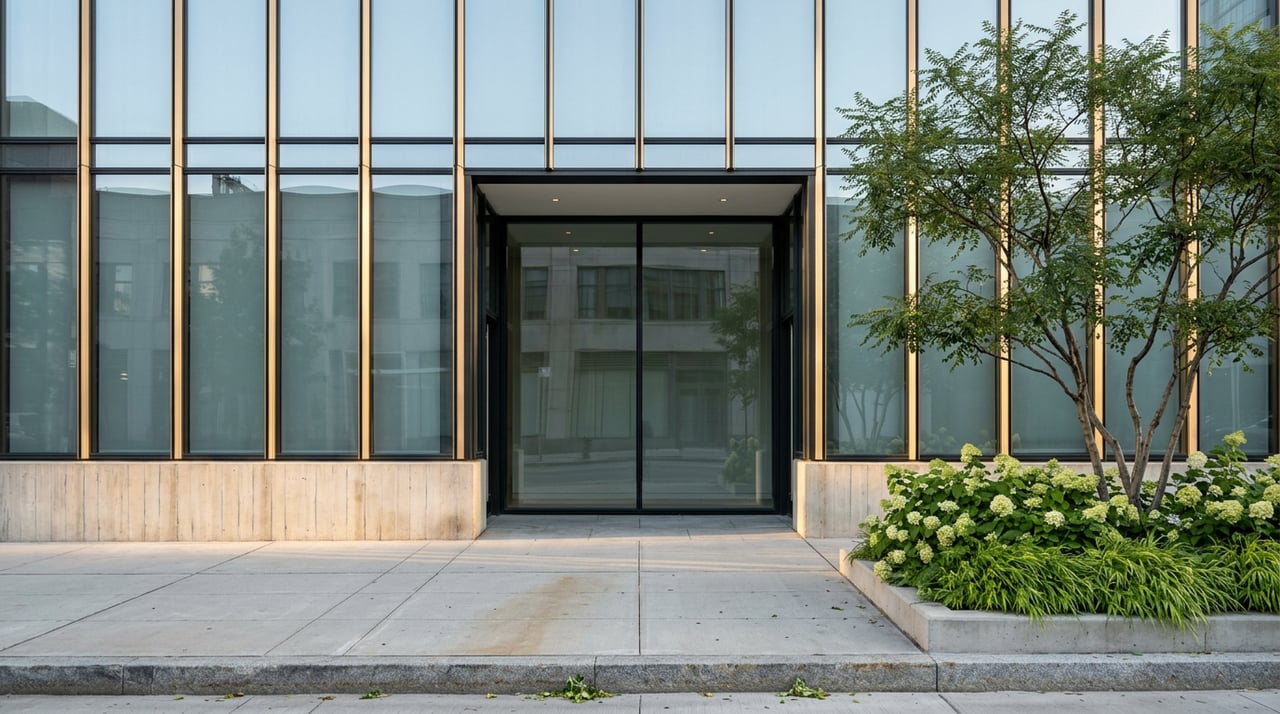
Newer condos cluster along the waterfront near Brooklyn Bridge Park and the Dumbo border, trading at a premium for elevator service, amenities, and a faster closing process with no board interview.
The spread inside these categories is its own lesson. A two bedroom co-op at 60 Pierrepont Street, set inside a 25 foot wide Italianate townhouse with a 500 square foot terrace, recently listed at $1,795,000. A few blocks away, a four story Federal-style house at 25 Cranberry Street, built around 1790 and comprehensively restored, came to market asking $4.9 million for 3,200 square feet. And this summer, a 6,625 square foot brownstone at 192 Columbia Heights closed for $24.5 million in an off market deal, setting a borough record for price per square foot and ranking as the third most expensive residential sale in Brooklyn history. That same reporting noted actress Amy Schumer's sale of her townhouse at 19 Cranberry Street for $11 million, a $1.25 million loss on the $12.25 million she and her husband paid in 2022. Even trophy assets in this neighborhood don't move in a straight line, which is exactly why a three month median built from a handful of these deals tells you so little about what your own purchase or sale should look like.
The One Real Supply Shock On The Way
If scarcity has defined Brooklyn Heights for sixty years, the closest thing to a break in that pattern is now working through the city's approval process a few blocks from the Promenade. CIM Group, working with Morris Adjmi Architects, has proposed converting the long vacant former Jehovah's Witness headquarters at 25-30 Columbia Heights, the buildings once known for their illuminated Watchtower sign, into 661 apartments, with roughly a quarter set aside as permanently affordable. The plan would add five stories to the 12 story building at 25 Columbia Heights and one story to the "Welcome" sign building at 30 Columbia Heights, while leaving three smaller nineteenth century structures on the site untouched.
The proposal entered the city's Uniform Land Use Review Procedure earlier this year, and if it clears review, construction could begin as early as 2027 with completion targeted for 2029. Brooklyn City Councilmember Lincoln Restler has said publicly that preserving sightlines to the Brooklyn Bridge from the Promenade will be a condition of any approval, and some residents have raised concerns about scale in a neighborhood that has changed so little architecturally for decades.
Worth being precise about what this project would and wouldn't do to the market: the units are proposed as rentals, not condos, so they won't enter the for-sale comp set directly. But at roughly 1,446 new residents projected for the site, it would be the largest single addition to the neighborhood's housing footprint in a generation, in a market where the entire quarterly transaction count runs in the dozens.
What To Check Before You Trust Any Headline Number
- Look at price per square foot over a full year, not a rolling three month window. Quarterly deal counts in the Heights are too small to smooth out one or two unusual closings.
- Separate co-op comps from condo comps before drawing a conclusion. Blending them produces a median that describes neither.
- Confirm whether a listing's recent renovation was interior only or included exterior work that required Landmarks review, since that history affects both timeline and cost for a new owner planning changes.
- Weight comparable sales on the same block or in the same building over any neighborhood wide average.
Common Questions
Why is Brooklyn Heights a landmark district in the first place? Community groups petitioned the city through the 1950s and early 1960s to protect the neighborhood's brownstone rowhouses, and in 1965 it became New York City's first designated historic district, a status later recognized at the national level as well.
Will the Watchtower conversion give me new condos to buy? As proposed, the 661 units at 25-30 Columbia Heights would be rentals, not for-sale condos. It's still worth watching, since it would be the largest housing addition the neighborhood has seen in decades and could ease broader pressure on the local rental market even if it doesn't touch your buy side comps.
Should I trust price per square foot more than the median sale price? It's steadier, since it controls for size, but it isn't immune to the same small sample problem. PropertyShark had it flat year over year in Q2 2026 while Redfin showed a 9 percent decline over its own three month window. Treat it as a directional signal, then build your actual number from comparable closings in the same building type and block.
Numbers pulled from a portal can tell you which direction a neighborhood moved on average. They can't tell you what a specific co-op board expects, what a landmarked exterior will cost to maintain, or what a comparable unit two blocks over actually closed for last month. That's the part of the Brooklyn Heights market that doesn't show up in a three month window, and it's the part worth getting right before you write an offer or set an asking price.
If you're weighing a purchase or a sale in Brooklyn Heights and want the comparable sales that actually apply to your building and block, Ian Radoncic can walk through them with you. Schedule a consultation to get a read on the market that goes past the headline.