If you are thinking about living in DUMBO, you are probably wondering whether the neighborhood is just a postcard view or a place that truly works for daily life. That is a fair question, especially in New York, where a beautiful block can feel very different once you factor in housing, transit, and routine. The good news is that DUMBO offers a distinctive mix of waterfront access, loft-style living, and strong connectivity. Here is what it is actually like to live in DUMBO Brooklyn.
DUMBO has a strong sense of place
DUMBO stands for Down Under the Manhattan Bridge Overpass, a name adopted by residents in 1978 as the area was shaping its identity. Today, the neighborhood sits along Brooklyn’s East River waterfront between the Brooklyn and Manhattan Bridges, which gives it one of the most recognizable settings in the city.
That setting does a lot to define everyday life. You are not just living near the water. You are living in a compact Brooklyn neighborhood where the bridges, cobblestone streets, and waterfront paths are part of the daily backdrop.
DUMBO is also part of Brooklyn Community District 2, alongside areas like Downtown Brooklyn, Brooklyn Heights, and Vinegar Hill. So while it has its own look and rhythm, it also connects naturally to the larger downtown Brooklyn area.
Historic character shapes the neighborhood
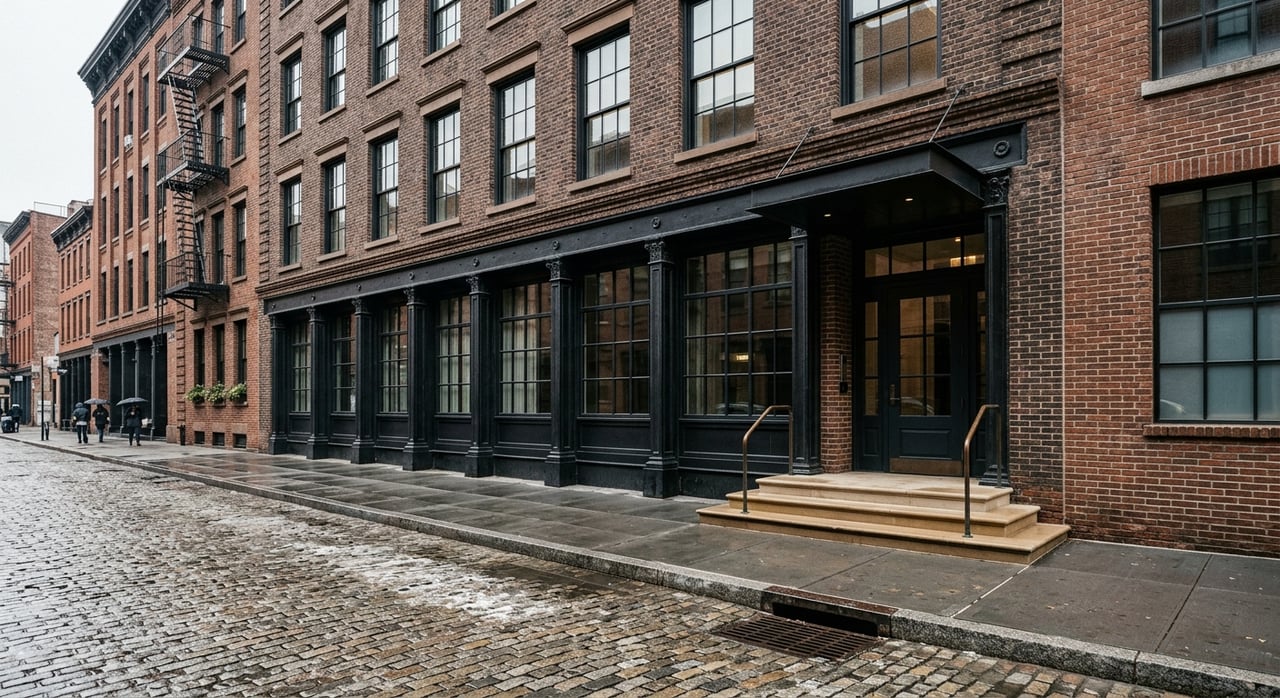
One of the first things people notice in DUMBO is its industrial architecture. The DUMBO Historic District was designated in 2007, and many streets still feature original granite Belgian block paving and old rail tracks from the area’s manufacturing past.
That history is not tucked away. It is visible in the buildings, the streetscape, and the neighborhood’s overall texture. If you are drawn to places that feel architecturally layered rather than newly built from scratch, DUMBO tends to leave a strong impression.
The neighborhood also has an active public art and design presence. Team Dumbo notes that the area includes more than 150 artist studios and more than 50 architecture and design firms, along with public spaces like the Dumbo Archway + Plaza, Washington Street, and Old Fulton Plaza.
Housing in DUMBO feels loft-oriented
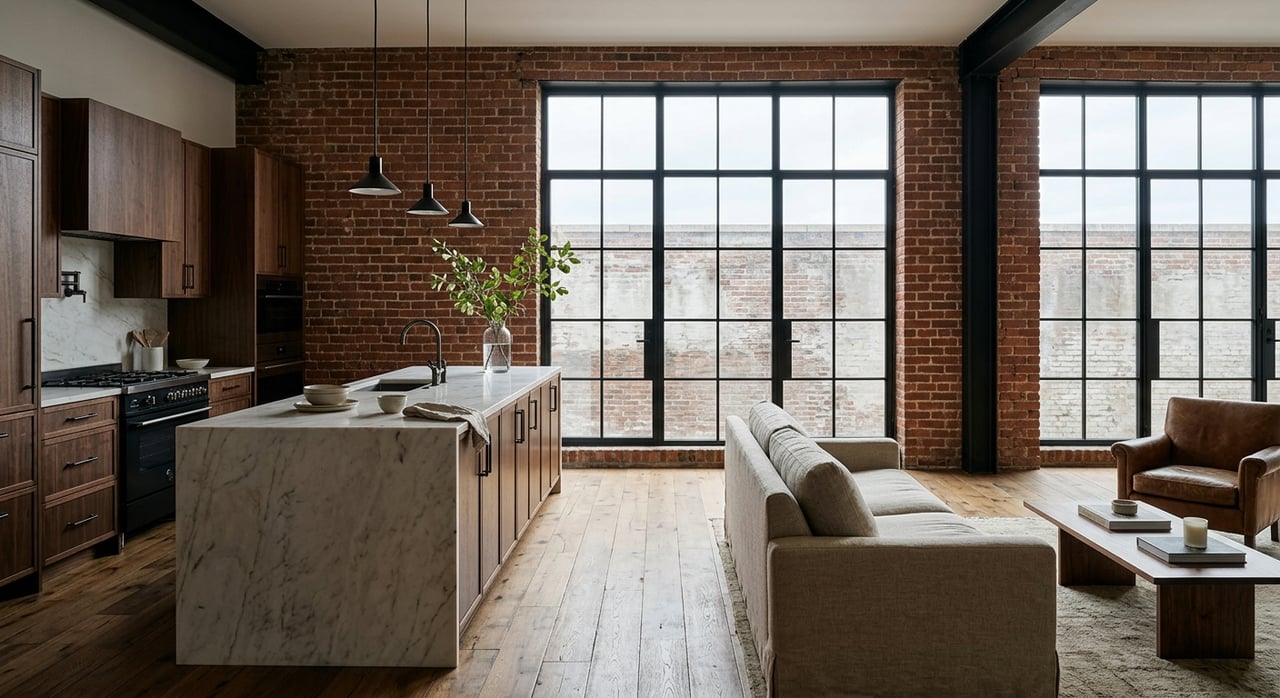
If you are comparing Brooklyn neighborhoods, DUMBO does not read like a classic brownstone area. Its housing stock is more closely tied to adaptive reuse, with former industrial buildings converted into residential and office spaces over time.
Artists began moving into the area in the late 1970s and converting loft spaces, and city planning efforts later supported residential conversions and mixed-use development while preserving the neighborhood’s historic character. In practical terms, that means many homes in DUMBO feel loft-like, with the neighborhood defined more by converted warehouse buildings and mixed-use properties than by traditional rowhouses.
For buyers, renters, and investors, that creates a specific kind of inventory. If you like the idea of large windows, industrial proportions, and a more downtown-style residential feel, DUMBO may be a strong fit.
The streets feel historic but updated
DUMBO’s visual identity is tied to its cobblestone streets, but the neighborhood has also seen major public infrastructure improvements. In 2025, the city announced the completion of a $108 million restoration project covering 26 blocks.
That work included rebuilt cobblestoned streets, improved stormwater drainage, reduced combined sewer loading into the harbor, new bike lanes, and Pearl Street Plaza. For residents, the result is a neighborhood that still feels historic underfoot while benefiting from modern upgrades.
That balance matters more than it may seem on paper. It helps DUMBO feel polished and functional without losing the character that makes it stand out.
Brooklyn Bridge Park shapes daily life
If there is one feature that truly defines what it is like to live in DUMBO, it is Brooklyn Bridge Park. The park spans 85 acres along the waterfront, is open daily from 6 a.m. to 1 a.m., and offers free access.
This is a major part of the neighborhood’s appeal. In many parts of New York, green space is something you visit occasionally. In DUMBO, the park can become part of your normal routine, whether that means a morning walk, an after-work run, or weekend time outside.
What you can use in the park
Brooklyn Bridge Park offers a wide range of spaces and amenities across its piers and waterfront sections. Depending on where you spend time, that can include:
- Large lawns and promenades
- Playgrounds and swing sets
- Basketball, handball, pickleball, and ping pong
- Fitness equipment and sports fields
- Picnic tables and shaded seating
- Dog run access in designated areas
- Ferry landings
- Restrooms and water fountains
Pier 1 is known for lawns, pathways, a playground, and waterfront seating. Pier 2 leans more toward active recreation, while Pier 5 focuses on sports fields and open views. Pier 6 adds playgrounds, sand play, water features, volleyball courts, picnic areas, and food options.
Main Street adds another layer with a lawn, playground, dog run, the Environmental Education Center at 99 Plymouth Street, and the Cliffs bouldering facility. The Environmental Education Center is open free to families and park visitors on weekends and after-school hours.
Park life is active and managed
The park is highly usable, but it is also clearly managed. Brooklyn Bridge Park notes accessible features across many facilities, and it has rules around bikes, dogs, and designated use areas.
That may sound minor, but it helps explain the feel of the neighborhood. DUMBO’s waterfront is not only scenic. It is organized, programmed, and built to support frequent public use.
Getting around DUMBO is relatively easy
For such a compact neighborhood, DUMBO has strong transit access. The F line serves York Street, and nearby stations include High Street on the A and C, Jay St-MetroTech on the A, C, and F, Clark Street on the 2 and 3, and Borough Hall on the 4 and 5.
That gives you several options depending on where you are headed. For many residents, one of DUMBO’s advantages is that it feels tucked along the waterfront without feeling cut off from the rest of Brooklyn or Manhattan.
Bus access also adds flexibility. Brooklyn Bridge Park lists the B25, B61, B63, and B67 around the neighborhood and park edges.
Ferry service is part of the lifestyle
Ferry access is another real benefit in DUMBO. NYC Ferry’s East River route stops at DUMBO/Fulton Ferry and connects to Wall Street/Pier 11 and East 34th Street, with peak-hour branch service that still includes DUMBO.
Brooklyn Bridge Park also notes ferry landings at Pier 1 and Pier 6 served by NYC Ferry, New York Water Taxi, and Governors Island Ferry. If you like the idea of mixing subway trips with waterfront commuting, DUMBO gives you that option.
Walking and biking make the most sense
DUMBO’s layout and amenities support a car-light lifestyle. Citi Bike stations are available near Pier 1, Pier 2, Pier 6, and Main Street, and both the park and Empire Stores note that parking is limited.
In practical terms, walking, biking, and transit tend to be the most convenient ways to move around. If you prefer neighborhoods where daily life feels more pedestrian-oriented than car-oriented, DUMBO fits that pattern well.
Everyday convenience is compact
DUMBO is not a sprawling neighborhood, so convenience tends to be concentrated rather than spread across a large area. That can actually be a plus if you like having key destinations close at hand.
Empire Stores is a good example. The repurposed complex includes shopping, dining, cultural uses, and a rooftop garden, and the park highlights options like Time Out Market New York, ABC Kitchens, and Cecconi’s.
That local concentration helps support everyday routines. You may still leave the neighborhood often, especially in New York, but DUMBO offers enough nearby structure for meals, errands, and casual outings to feel easy.
The vibe is visual, creative, and waterfront-focused
DUMBO feels visually distinctive in a way that few neighborhoods do. Between the bridge views, industrial buildings, waterfront paths, public plazas, murals, and art installations, the neighborhood often feels cinematic.
But it is not only about appearance. The presence of artist studios, architecture firms, public art, and reused industrial space creates a neighborhood identity that feels creative and design-aware without losing its working-city roots.
For many people, that is the real appeal. DUMBO offers a downtown sensibility in a waterfront setting, with enough infrastructure and transit to support everyday life.
Who tends to like living in DUMBO
DUMBO can appeal to a range of buyers and renters, but it is especially compelling if you value a few specific things. It may feel like a fit if you want:
- Loft-style or mixed-use housing instead of classic brownstones
- Frequent access to waterfront paths and park space
- Strong subway and ferry connections
- A compact neighborhood where walking is practical
- Historic architecture paired with modern infrastructure
- A visually distinctive Brooklyn setting
The neighborhood may be less aligned with what you want if your ideal Brooklyn experience centers on a traditional rowhouse streetscape or a more spread-out retail scene. DUMBO is compact, highly defined, and shaped by its industrial and waterfront setting.
What living in DUMBO comes down to
Living in DUMBO is less about checking one box and more about liking a very specific combination of features. You are choosing a neighborhood where historic warehouse buildings meet residential conversions, where the waterfront is part of your routine, and where getting around often means walking, biking, taking the subway, or catching a ferry.
That combination is exactly why DUMBO stands out. It offers a polished but grounded version of Brooklyn living, with strong design character, daily park access, and a clear sense of place.
If you are considering a move to DUMBO, working with a local advisor can help you compare building styles, understand the residential feel block by block, and find the right fit for your goals. If you want thoughtful guidance on buying, selling, renting, or investing in Brooklyn and Manhattan, connect with Ian Radoncic.
FAQs
What is DUMBO Brooklyn known for?
- DUMBO is known for its East River waterfront setting, views framed by the Brooklyn and Manhattan Bridges, historic industrial architecture, cobblestone streets, loft-style housing, and direct access to Brooklyn Bridge Park.
What type of housing is common in DUMBO Brooklyn?
- Housing in DUMBO is largely shaped by converted industrial buildings and mixed-use development, so the neighborhood is more loft-oriented than rowhouse-oriented.
Is Brooklyn Bridge Park a big part of daily life in DUMBO?
- Yes. Brooklyn Bridge Park is a major part of the neighborhood experience, with waterfront paths, lawns, playgrounds, sports areas, picnic spaces, ferry access, and other amenities that support daily routines.
How do you get around from DUMBO Brooklyn?
- DUMBO is served by the F train at York Street, with nearby access to the A, C, 2, 3, 4, and 5, plus local buses, ferry service, and Citi Bike stations.
Is DUMBO Brooklyn good for walking?
- DUMBO functions as a compact, walkable waterfront district where many daily routines are supported by walking, biking, and transit rather than driving.
What makes DUMBO Brooklyn feel different from other neighborhoods?
- DUMBO stands out for its mix of industrial history, adaptive reuse housing, public art, waterfront park access, and dense connectivity in a relatively small footprint.